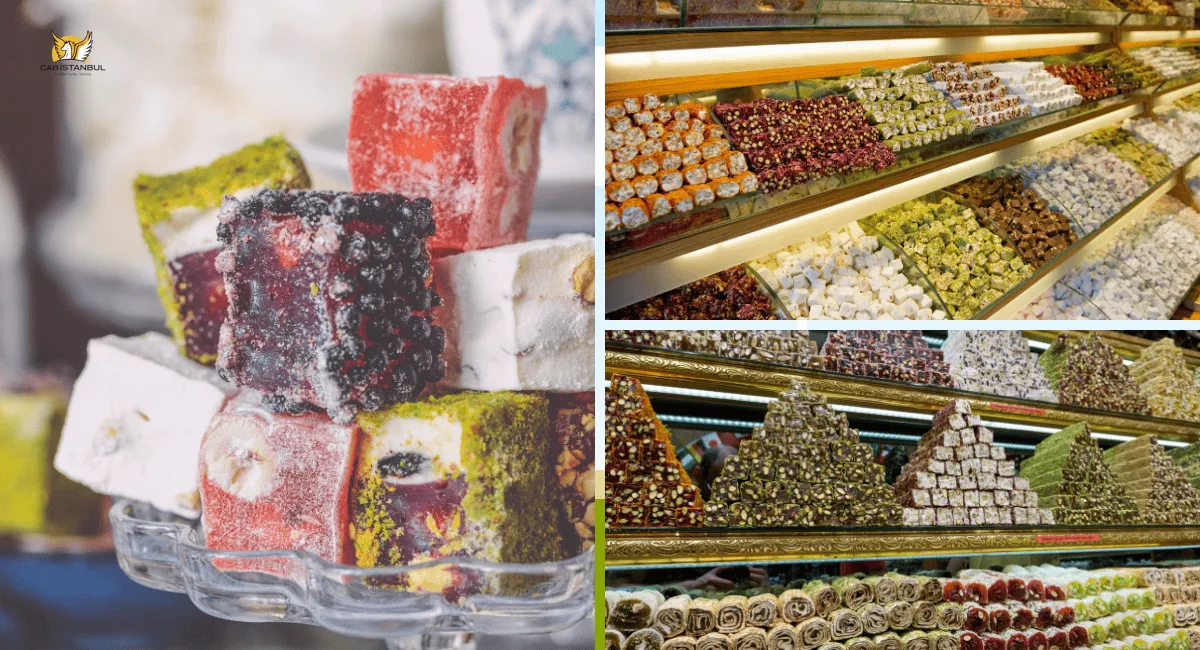
What is Turkish Delight, and why is it significant in Turkish culture?
- Turkish Delight, known as Lokum in Turkey, is a traditional sweet confectionery that has been a part of Turkey's culinary heritage for centuries. It's not just a sweet treat but a reflection of Turkey’s rich history, culture, and the ancient craftsmanship of Turkish confectioners. Its diverse flavors and unique texture make it a cherished delicacy, often enjoyed alongside Turkish coffee and shared during special occasions.
What İs Turkish Sweets History?
- The process of making Turkish Delight starts with boiling sugar in water The historical thread of Turkish Delight intertwines with the regal culinary traditions of the Ottoman palace, tracing back to ancient times. Interestingly, its sweet lineage links to the Persian Empire’s ‘abhisa’, a joy-inducing sweet consumed between 226 and 652 BC. The narrative of sweets’ evolution might leave us pondering the chronology of chocolate and Turkish Delight, yet the latter has carved a notable niche alongside renowned global sweet treats like Swiss chocolate.
The name Turkish Lokum is derived from “ul-hulküm”, translating to a soothing or relaxed throat, eventually metamorphosing to "Rahat Lokum". The sweet delight bloomed in Anatolia during the 15th century, gaining immense popularity by the 17th century. The 18th-century European introduction of Turkish Delight by travelers ignited a love affair with this Ottoman sweet, a sentiment echoed in the phrase, “They love Turkish Delight.”t.
What are some popular varieties of Turkish Delight?
🍬 Natural Energy SourceHigh in carbohydrates (mainly from sugar), lokum provides a quick energy boost, especially useful during physical activity or long days.
🫖 Soothes the Throat The name "rahat-ul hulküm" means “comfort for the throat” — its soft texture and mild sweetness can be soothing for mild throat irritation.
🧠 Mood Enhancer Sweets, including Turkish delight, can temporarily boost mood by increasing dopamine levels, particularly with ingredients like rosewater or saffron.
🥜 Nutty Varieties Add Nutrients Versions with pistachios, hazelnuts, or walnuts provide healthy fats, protein, fiber, and minerals such as magnesium and vitamin E.
🌱 Vegetarian-Friendly Unlike gelatin-based sweets, lokum uses starch as its gelling agent — making it suitable for vegetarians.
What are Risks of Turkish Delight?
🚫 High Sugar Content A typical serving is high in refined sugars, which can lead to blood sugar spikes, weight gain, and increased risk of type 2 diabetes if consumed excessively.
🦷 Tooth Decay Sticky and sugary, lokum can cling to teeth, promoting cavities and gum issues if oral hygiene is poor.
🍭 Low Nutritional Density Plain versions offer minimal vitamins, fiber, or protein — mostly empty calories.
⚖️ Portion Control is Difficult Because it's soft, small, and addictive, it's easy to overeat without noticing.
🔁 Highly Processed (Some Brands) Commercial brands may include preservatives, artificial colorings, or flavor enhancers that are less healthy than traditional recipes.
What's Nutritional Sketch of Turkish Delight?
- The nutritional profile of Turkish Delight, or Lokum, largely hinges on the ingredients enlisted in its preparation. On an average scale, a 100-gram serving of Lokum encapsulates 89.28 grams of carbohydrates, 0.12 grams of protein, 0.19 grams of fat, with traces of essential minerals like potassium, calcium, and iron, yet devoid of fiber and cholesterol.
Where are Turkish Delight Wholesalers?
- Istanbul's vibrant bazaars, namely the Egyptian Bazaar and the Grand Bazaar, are the go-to realms where Lokum graces every nook and corner. Here, a plethora of fresh and delectable varieties await to satiate your sweet cravings.
What is the historical lineage of Turkish Delight?
- Turkish Delight has a rich history tracing back to the Ottoman Empire, with its name derived from "ul-hulküm", meaning a soothing throat. The confectionery gained popularity in the 17th century and was introduced to Europe in the 18th century, where it continued to garner love and admiration.
Are there any health benefits associated with Turkish Delight?
- While Turkish Delight is a sweet treat, it's known to have some health benefits like aiding in reducing tonsillar inflammation and serving as a source of beneficial carbohydrates for kidney patients. However, moderation is advised due to its sugar content.
How can I seamlessly experience the sweet culture of Istanbul?
- To savor Istanbul's sweet culture, consider utilizing the Istanbul airport transfer service offered by Cab Istanbul for a hassle-free journey from the airport to key city spots. This service facilitates a smooth start to your sweet expedition, immersing you into the heart of Istanbul’s rich culinary traditions.
How has the tradition of Turkish Delight evolved over time?
- The tradition of Turkish Delight has transcended through time, with modern-day confectioners offering an eclectic array of Lokum varieties while preserving the ancient recipes and techniques. The sweet legacy of Lokum continues to be a cherished part of Turkish culture and a delightful experience for both locals and global sweet enthusiasts.